
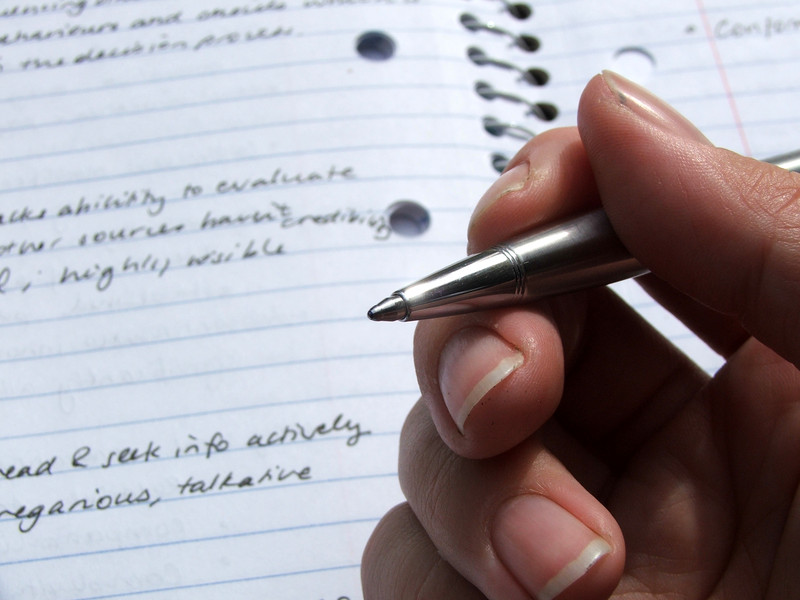
“In the journal I do not just express myself more openly than I could to any person;
I create myself.”
~Susan Sontag
Do you keep a Journal?
If yes ! …You already are pointedly aware and privileged to understand and attest to the benefits and pleasures that flow from your earnestness.
If no (#!%#)… Get started! It is an explosive experience and tool that will help make you who you want to be, take you where you want to go, and focus you to achieve what you need to achieve!
So, what is journaling? It’s an ancient practice, dating back to at least the 10th century that has served to clarify personal meaning and purpose for individuals across the entire swath of history.
For some, it is a management tool, for many, it is a creative impetus, for others, an act of exploration, and for a select few, an art form in and of itself.
Luminaries as disparate as Thomas Jefferson, Charles Darwin, Lewis Carroll, Anne Frank, Ralph Waldo Emerson, C.S. Lewis, Winston Churchill, Sacagawea, Franz Kafka and Virginia Wolfe…all famously practiced dedication to keeping a journal to record all things of importance and of impact.
Journaling has been described as one of the greatest tools for motivating, measuring and moving forward. In the wellbeing field it is a primary strategy for successful exercise programs, healthy eating, smoking cessation and other behavioral change efforts—intense or whimsical. As noted by WebMD, it’s been clinically proven that keeping a journal about what you eat “is the single most effective method for controlling and reducing your daily caloric intake”.
Most “Journal” about what is important to them. It helps them stay connected to their purpose, goals, values and emotions.
Most importantly, multiple studies have shown that Journaling impacts significant positive change to your self-efficacy—your personal belief about your ability to initiate, persist in, and be successful in behavior, from smoking cessation to athletic endeavors to academic performance. Increasing your self efficacy is an accurate predictor of success in a range of behaviors.
According to the Mental Health America website, whether you’re managing a new situation, coping with a crisis, or just trying to have a better understanding of yourself, journaling can help you gain control of your emotions and improve your mental health.
Amanda L. Chan of the Huffington Post, has found that Journaling “has been linked with improved mood, well-being, stress levels and depressive symptoms, as well as more physical benefits of lower blood pressure, improved lung and liver functioning and decreased time spent in the hospital.
Here are just some of the reported benefits people receive from Journaling; most list many of the following, not just one or two! Any of them look like they might be beneficial to you and your vision?
- To get to know themselves better
- To connect with their goals and values
- To unplug and recharge
- To solve problems
- To express gratitude
- To record significant happenings
- To throw away negative thoughts
- To clarify goals
- To process life events
- To ask important questions
- To record travel highlights
- To reduce stress
- To track their development
- To eliminate temptations
- To clarify thoughts and feelings
- To improve insight and understanding
- To achieve personal growth
- To keep accountable
- To notice their feelings
- To encourage positive thinking
- To solidify a memory
If you are anxious to reap the journaling benefits for yourself, tee up the following guidelines prepared by BlueCross BlueShield of Tennessee and begin at once:
- First, establish a daily routine. Set aside 20 minutes a day to write in your journal — in the morning as a way to start your day, or before bed as a way to reflect upon the day’s events.
- Find a journal medium fit for you. A notebook, computer, mobile device — there are many ways you can keep a journal. Everyone has their own writing style, so it’s important you choose the method that works best for you.
- Do it your way. There are many types of journals — reflective journals, gratitude journals, even drawing and painting journals. A journal can be anything you want it to be, so use it as you see fit. Writing in a journal is one of the few places where you get to do it your way!
- Write without worry. Remember, there are no rules. (Try to write quickly, as this frees your brain from “shoulds” and other blocks to successful journaling) This isn’t English class; so don’t worry about formatting, spelling or grammar. You don’t even have to write in complete sentences — this only has to make sense to you!
- Choose a safe, quiet place to journal. This is a time of personal reflection and relaxation. It requires solitude and no interruptions. Try writing in a place that’s relaxing and soothing — maybe with a nice scented candle and a cup of tea.
- Keep your journal private. Get a book that locks or keep it hidden. If you use a computer, password-protect your journal. It’s yours and yours alone!
“Create a personal development plan for carrying out your desire and
begin at once,
whether you’re ready or not, to put this plan into action.”
~ Napoleon Hill